
TL;DR – Key Takeaways
- Adaptive reuse gives old buildings new life without losing their soul.
- It’s sustainable, often more cost‑effective, and rooted in local heritage.
- Success depends on structure-first thinking, design flexibility, and sensitive detailing.
- We plan, design, and deliver end-to-end — balancing modern function with historical integrity.
Introduction: Why Adaptive Reuse Matters Now
Demolition is easy. Creating value from what exists takes skill. That’s why adaptive reuse architecture has moved from niche to mainstream. It keeps embodied carbon in play. It preserves a site’s story. And it often moves faster through planning than a full new build.
At KFM, we specialise in turning “past its best” into “best in class”. We repurpose buildings for modern living, working, and gathering. We keep character. We upgrade performance. We create spaces that people love to use.
In this guide, I’ll walk you through the principles, the process, and the payoffs of adaptive reuse — and how we make it work on real projects.
This post is for you if…
- You own or manage an older building with untapped potential.
- You want sustainable, cost‑smart options.
- You value heritage but need modern performance.
- You’re exploring residential, commercial, or mixed‑use conversions.
Understanding Adaptive Reuse and Its Benefits
What is adaptive reuse?
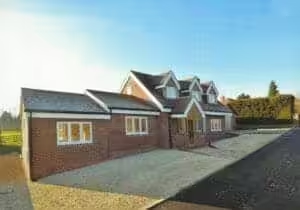
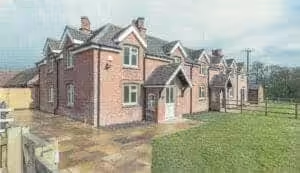
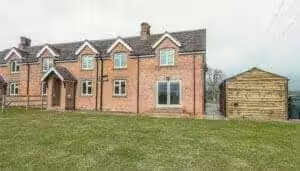
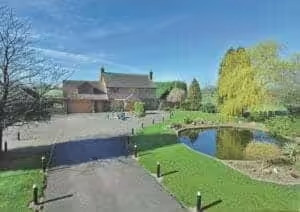
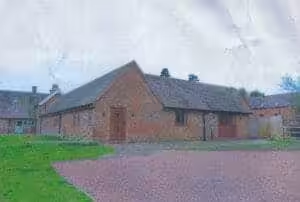
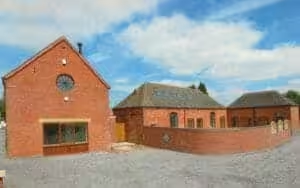
It’s the architectural approach of repurposing existing structures for new uses. We don’t just refurbish. We reimagine. Barns become homes. Warehouses become studios. Chapels become cafés. The bones remain. The purpose evolves.
Why clients choose it
- Environmental gains: Less demolition. Less waste. Lower embodied carbon.
- Economic logic: Reuse can reduce programme risk, shorten approvals, and cut materials spend.
- Cultural value: Buildings carry memory. Reuse keeps that identity alive, which boosts appeal and price.
- Planning advantages: Sensitive reuse often lands better with planners and communities.
Where KFM adds value
We bring design and delivery under one roof. We test feasibility early. We map costs honestly. And we coordinate structural, M&E, and heritage inputs so you don’t have to.
>> Learn more about our process
The Pillars of Successful Adaptive Reuse
Adaptive reuse succeeds when we balance structure, services, and story. Here’s how we do it.
1) Structural integrity first
We commission surveys. We open up. We test assumptions. If the frame is sound, we build from it. If not, we reinforce discreetly with steel, timber, or composite solutions. The goal: keep authenticity, raise performance.
Checklist we run:
- Load paths and deflection limits
- Moisture ingress and timber condition
- Foundations and ground conditions
- Fire strategy implications of the existing fabric
2) Balance old and new
We highlight original fabric: brickwork, beams, stone, trusses, arches. We pair it with modern insertions that contrast cleanly: slimline glazing, simple joinery, quiet lighting. The old sings. The new supports.
We avoid: pastiche detailing, over-cladding character, and forcing modern layouts that fight the building.
3) Design flexibility
Old shells don’t always fit new uses. We create adaptable layouts that can evolve. Think modular partitions, mezzanines, and multifunctional zones. The space earns its keep across time.
“It’s not about making old things new. It’s about making them useful.”
Enhancing Functionality: From Shell to Space People Love
Redesigning interiors for purpose
- Homes: Open living, tucked-away utilities, and calm bedrooms under vaulted roofs.
- Offices and studios: Daylight-led planning, acoustic control, and robust services routes.
- Hospitality and retail: Clear customer flow, back-of-house efficiency, and dramatic feature moments.
Integrating modern infrastructure
We thread in the essentials without visual noise:
- M&E: Neat service runs, access points, and zoned control.
- Heating & cooling: Underfloor systems, ASHPs, or MVHR where appropriate.
- Lighting: Layers — task, ambient, accent — set to highlight texture and form.
- Data & smart: Hidden conduits with future expansion in mind.
>> Want a feasibility view of your building?
Preserving Historical Character and Architectural Integrity
This is where restraint wins.
What we protect
- Original masonry: cleaned, repointed, celebrated.
- Timber and trusses: assessed, repaired, sometimes left raw with breathable finishes.
- Proportions and rhythm: window placement, bay spacing, and roof pitches kept consistent.
- Signature elements: arches, lintels, sills, plaques — the details that make it unique.
How we deliver it
We collaborate with conservation officers, structural engineers, and artisan craftspeople. We specify breathable materials. We document every intervention. We align with listed building requirements where relevant.
>> See more traditional to contemporary conversions.
Sustainability and Energy Efficiency: Reuse as a Green Strategy
Adaptive reuse is inherently resource-smart. But we don’t stop there.
Our sustainability playbook
- Fabric-first upgrades: Natural insulation in roofs and walls, airtightness improvements, and thermal breaks.
- Efficient glazing: Secondary glazing or slimline double glazing to preserve profiles.
- Low-energy systems: ASHPs, solar where viable, and demand-controlled ventilation.
- Water and landscape: Low‑flow fittings, rainwater strategy, and biodiversity-friendly planting.
Result
Lower operational costs. Higher comfort. A building that performs like new while looking like itself.
>> See how we approach sustainable design.
Common Adaptive Reuse Transformations (and Why They Work)
Warehouses → Loft apartments or creative offices
- Big spans. High ceilings. Honest materials.
- We add mezzanines, acoustic treatment, and daylight strategies to create productive, inspiring spaces.
Churches & schools → Community hubs, event spaces, cafés
- Strong volumes. Heritage elements that create drama.
- We layer in accessibility, catering services, WCs, and acoustics without dulling the impact.
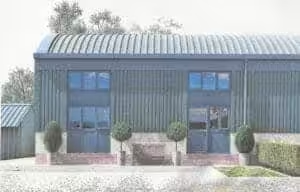
Agricultural & industrial buildings → Family homes, studios, mixed‑use
- Rugged shells with beautiful bones.
- We keep the silhouette, upgrade the envelope, and weave in modern comfort.
Planning, Permissions, and Stakeholders: Navigating the Path
Adaptive reuse shines when planning aligns with community benefit.
How we smooth approvals
- Clear heritage impact statements.
- Honest viability and access plans.
- Early engagement with conservation officers.
- Noise, transport, and daylight studies when needed.
We handle the paperwork and the dialogue. You get a cleaner path to a decision.
>> Our end‑to‑end planning support
Cost, Programme, and Risk: Straight Talk
Cost profile
Reuse can reduce groundworks and structure spend. It can also add specialist repair and conservation costs. We price both, up front. No surprises.
Programme
You’ll save time on major civils. You’ll spend time on investigation and coordination. The net effect is often positive — especially when planning supports reuse.
Risk control
We run staged surveys, set contingency bands, and lock scope before procurement. Then we sequence works to protect fabric and maintain quality.
>> Considering options? Let’s run a quick viability review
How We Work: KFM’s Adaptive Reuse Process
- Site + Fabric Assessment
Structural surveys, fabric condition, services capacity, and access. - Feasibility + Options
Concept layouts, cost ranges, planning notes, and programme outline. - Design Development
Heritage-informed detailing, M&E coordination, energy strategy, and finishes. - Planning & Approvals
Applications, statements, drawings, schedules, stakeholder engagement. - Pre‑Construction
Method statements, phasing, protection plans, and long‑lead procurement. - Construction & Fit‑Out
Careful strip‑out, repairs, integration of services, finishes, and commissioning. - Handover & Aftercare
Manuals, warranties, and post‑occupancy support.
>> Full design-to-delivery capability
Conclusion: Preservation Meets Progress
Adaptive reuse architecture is the sweet spot where sustainability, heritage, and modern function align. We respect the building’s story. We tune its performance. We deliver spaces that work for decades.
If you’ve got an older structure and a new vision, we’ll make the two meet in the middle — beautifully.
Got an old structure full of potential? We’ll help you bring it back to life.
>> Start your project conversation.
Is adaptive reuse more sustainable than new build?
Yes. You retain embodied carbon, cut waste, and usually reduce transport and materials.
Will I lose original features?
No. We protect and celebrate them. We add new layers that work quietly in the background.
Is it cheaper than new construction?
Often, yes — especially once you factor in demolition, groundworks, and planning sensitivity. But we’ll model both so you can compare.
How long does it take?
Programmes vary by condition and complexity. Our phased surveys de-risk the schedule early.
Can any building be reused?
Most can. It depends on structure, access, and planning context. We’ll assess feasibility first.